33. Travels with Hammy

 Podchaser
 Spotify
 Apple Podcasts
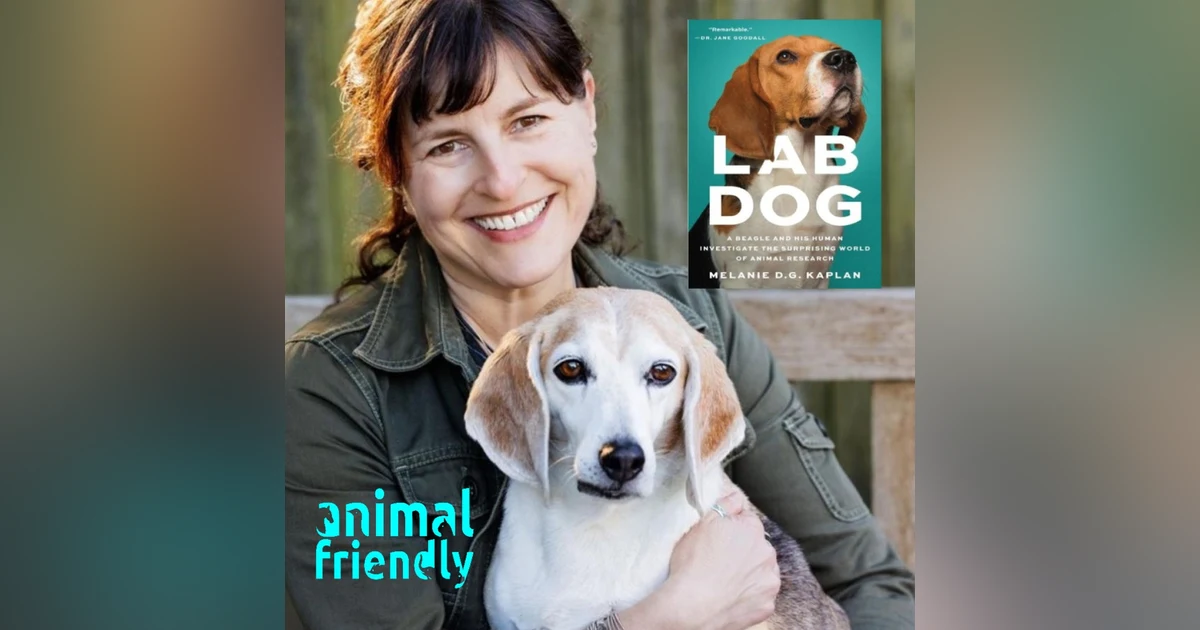
 Hamilton - or Hammy - is a beagle that was rescued from a research laboratory where he'd spent the first four years of his life. Melanie Kaplan adopted him and started on a journey to learn more about his past, as well as the broader world of animal research.
In her book - Lab Dog: A Beagle and His Human Investigate the Surprising World of Animal Research - she investigates the breeding and the use of beagles for biomedical research, drug and product testing, as well as education.
Throughout the book, she brings us along with her to find answers. How did Hammy end up in a research facility? Why are we still using millions of animals a year in experiments? Are we learning anything from it? Is there another way?
Melanie and I chatted about these questions and she shared her findings about the history of animal research as well as the current state and future direction of using animals in science.
https://www.melaniedgkaplan.com/
Buy it here (free shipping in Ireland):
Warm Hearts, Wet Noses, and the Questions We Can't Ignore - Full Webinar
https://www.youtube.com/watch?v=QO_LVouCK4k
SynDaver website.
https://syndaver.com/product-category/vet-full-body/
Justify organisation.
https://www.justifyglobal.org/
Save the Buns website.
Rodent Sanctuary Instagram links.
https://www.instagram.com/dr.rebeccagooley/
https://www.instagram.com/rodent.sanctuary/
How 2,000 beagles set the animal rights movement on fire (Marina Bolotnikova, Vox).
https://www.vox.com/future-perfect/486973/beagle-rescue-ridglan-animal-testing-research-rights
The Hidden Lives of Lab Animals (Larry Carbone).
https://www.goodreads.com/book/show/240731347-the-hidden-lives-of-lab-animals
Mickey Mouse - The Mad Doctor (1933)
https://www.youtube.com/watch?v=LPW70q4w5pw
Featured music:
https://soundcloud.com/jayjenmusic/sparkle
Track: Sparkle by JayJen
Watch: youtu.be/A7eloLKR-A8
Free Download / Stream: fanlink.to/JayJenSparkle
See omnystudio.com/listener for privacy information.
(music playing)
(voiceover quote)
(host) And you talk about how, when you were pitching the book, that some people were like, oh no, we like you, but not that topic. Is it hard? Did you do that when you were writing it? Were you like, this is going to be a hard sell, nobody wants to talk about this stuff? Or were you like, I'm just going to really do a good job of writing about it?
(Melanie) You know, I tried to turn off the voice that said the former, because it just wasn't, it wasn't helpful. And then once I decided I was moving forward with this, I just thought I have to be all in and believe that it's going to sell. And so the voice I kept hearing is really the one that was coming from Hammy and my relationship with Hammy, that I wanted people to know his story and I wanted people to be aware of this giant system and the research industry that bred him. And so that's really what kept me going. I didn't feel like I had a choice. I just felt like I had to tell his story.
HOST: Hello, and welcome back to the Animal Friendly Podcast. Today's guest is Melanie DG Kaplan, the author of Lab Dog. Hamilton, or Hammy, is a beagle that was rescued from a research laboratory where he'd spent the first four years of his life. Melanie adopted him and started on a journey to learn more about his past, as well as the broader world of animal research. In her book, she investigates the breeding and the use of beagles for biomedical research, drug and product testing, as well as education. Throughout the book, she brings us along with her to find answers. How did Hammy end up in a research facility? Why are we still using millions of animals a year in experiments? Are we learning anything from it? Is there another way? One review of the book says, part expose, part memoir, and part love story, Lab Dog is a compelling, often haunting narrative that will stay with you long after you have turned the final page. Despite the tough topic, Melanie's writing does make it easy to keep turning the pages and wanting to find out more. By coincidence, this interview happened around the time that 1,500 dogs were released from Ridglan Beagle Breeding Facility in Wisconsin, which was a really wonderful outcome after years of court cases and protests and just tenacious animal advocates fighting for these dogs and their freedom. I was so happy to talk to Melanie, who is contributing so much now to the conversation around the ethics of animal testing.
MELANIE: My name is Melanie Kaplan, and I'm a Washington, D.C.-based independent journalist. I've been freelancing for almost 30 years, which is crazy to say, but more recently, I had started writing more about science and animals, and I just finished my first book, which is Lab Dog, A Beagle and His Human Investigate the Surprising World of Animal Research.
MELANIE: You know, I am enjoying it. I'm enjoying it more than I expected because I've really never done any public speaking before, and I had just kind of worked myself up into such a fear of this. I had talked to another, another author friend, and he said he actually took some medication to relax before he did his talk, and I was fully prepared to need to do that. And someone just said to me, you know what, just tell Hammy's story and talk about what you know, and certainly I've been living, eating, breathing this for five years now, so I know it, and I'm really enjoying talking about it.
HOST: Yeah, I was interested to read that you don't really have a science background, so in the last few years, did you start writing about science, and did you have to learn a lot?
MELANIE: I had to learn so much, and when I say I was writing about science, I was really writing for the layperson, as the book is, and you know, I was writing about topics ranging from, you know, sea level rising to some animal issues, but this was the first time that I really had a chance to dig very deeply into one topic, and so much of it went over my head. Just reading scientific papers was really complicated, but I just thought I need to understand this, so then I can kind of translate it for all the lay readers who don't know that any of this is happening.
HOST: Yeah, and when you went around, so you talked to a lot of scientists, did they ever try to intimidate you with science talk?
MELANIE: I don't know if they were trying. I can be pretty easily intimidated, but you know, there's a series of questions I just like to ask people, and sometimes it gets them to say it differently, and sometimes it doesn't, but you know, I just ask them to explain what they just said, as though they're explaining to a fifth grader, or you know, telling their mother, and sometimes they just kind of repeat the same thing, and that's when I realized, okay, that's the only language they know.
HOST: Yeah, and one thing I was interested in, because the book, so I've read the book, and loved it, and it's the story of Hammy, who was originally a lab dog, and he was rescued, and you adopted him, and then you guys went on the road to kind of learn about his life, and you, so you talked to a lot of people, and you brought Hammy with you. When you were arranging interviews, was it like, by the way, I'm just gonna be bringing my dog in with me. Were people cool about that? In most cases, yes. I explained what I was doing, that Hammy and I were going on a road trip, and there were certainly some places he was not allowed, so I went into a mouse lab, and a naked mole rat lab at Boston University, and of course he was not allowed in there. I'm trying to think of other places where he wasn't allowed. You know, generally people were open to meeting him. I mean, he went into an organ chip lab, and he went into a number of people's homes, and offices, and it was great to have him with me, because of course Hammy was my companion, and we went on so many road trips together during our decade together, and you know, I just loved having him around, but I also wanted people to meet him, because most people don't have a chance to meet an animal who's been in a lab, and then has, you know, been rehomed, or rescued, or whatever word you want to use, but he's left the lab, and now living his best life.
HOST: Yeah, I was just amazed, because you've talked to, you talked to scientists, you talked to senators, and Hammy was always there, or you know, he'd be sitting, or someone would take him for a walk, and I was like, people are just so amenable, you know, obviously most people are amenable to having a dog around, and they're probably as excited to meet him as to meet you.
MELANIE: If not more so. Yeah, there's one place in Florida, it's a company called Syndaver, that makes just incredibly lifelike models of humans, and also dogs, and the dog models are used in veterinary training, and so I toured that facility, he was, he was allowed into the office, but not into the factory part, so I think it was the, the person who was then president, was kind of dog-sitting Hammy for a little while, while I was touring, so that was fun, he did great, both of them did great.
(HOST VOICEOVER): A quick explainer, Syndaver is a company that creates realistic animal models for use in labs or veterinary settings. They make human models too, but refocused on the animals. Melanie writes in the book: “a high-fidelity dog model from Syndaver is anatomically accurate, with complete circulatory, pulmonary, reproductive, and digestive systems, and surprisingly realistic tissue. Its lungs inflate, its organs have tumours, its veins bleed when nicked, and its intestines come with a toy stuck inside, because, well, dogs.” This kind of wry humour is present throughout the book, and it definitely makes the tough subject more bearable to read about.
HOST: Syndaver is an amazing, so this is one of the alternatives to animal testing, and there are people making these kind of dog models, and, and they send them out to schools, and other, other sort of places. Were they really lifelike, or were they, did they feel like dog parts, or what do they look like, or feel like?
MELANIE: Well, I have to say, I have never felt, fortunately, the inside of a human or an animal, but, you know, when I was taking the tour, the, the woman who was showing me around, she'd hold out like a, like a liver, or some other organ, and it just felt kind of wiggly and squishy. I mean, as I would imagine an organ would feel, and when you look at the, the human, I mean, even on their website, it looks kind of like a body that has had the skin removed, so it's a little gory looking, but it, it's got, you know, it's very accurate. The dog model can, you know, be used for testing veterinary students. It's got, you know, everything, all the organs inside, and if they're doing a space surgery, for example, they can do what they need to do, and then those particular organs can be, like, the uterus can be replaced, so they can still have kind of the chassis of the, you know, the body to reuse, because they're, they're rather expensive, and I know the company is experimenting now with renting out the dog models to vet schools, so they'll just be there for a, you know, dog lab that could be, you know, just part of a semester, maybe it's just a couple weeks or something, and then the dogs go back to Syndaver, and they get cleaned up, and then they get rented out to another school, so I'm hoping that will make it more accessible to, to more schools that can't afford to buy the dogs.
(HOST VOICEOVER): Throughout the book, Melanie presents both sides of the story, and I found myself being able to see the point of view of the researchers who believe that animal testing is necessary, but I also remained furious at the sheer level of waste and bad science that is also apparent. Almost every page of the book contains a revelation, or a note that you want to highlight, such as this quote from Dr Elinor Carlson, Director of Vertebrate Genomics at the Broad Institute of MIT and Harvard. “We've cured cancer in mice God knows how many times, but,” she says that only gets us so far, because, quote, “we have a much more complex disease than the cancer we give mice”. Although alternatives to animal testing are now being developed, animal research is still very much the norm in so many areas. I wanted to get a sense of the history and how it all evolved.
HOST: So let's go back to, what I was surprised by is how recent everything is. We're talking about the Animal Welfare Act was 1970. Beagle breeding started in the 1950s and the 1960s. That's only like 70 years ago. Everything that you were talking about is in kind of living memory, that this whole beagle industry started.
MELANIE: The Animal Welfare Act was 1966.
HOST: (laughing) Okay, that was just me testing you. Do you know all the details in your book? Yes, you do. Well done.
MELANIE: Yes, it really took a long time for the United States to have an animal welfare law. And, you know, in some ways, 1966 is is recent. And in other ways, it was a long time ago, because it hasn't changed much. And the world around it has changed so much, you know, when you talk about these non-animal alternatives, and what we know now about animals that we didn't know, just in terms of sentience and what the animals feel. And, you know, the Animal Welfare Act includes hundreds of species, you know, we have primates and dogs and cats, ferrets, rabbits, pigs, and all sorts of birds, I mean, flamingos, and some penguins and so many species, but mice and rats are not included on that. And fish are not included. And there's things we know about those species that we didn't know in 1966. So, you know, just looking at everything that's changed, it's surprising to me that the Animal Welfare Act has not been updated more.
HOST: Yeah. And of course, in that time, we're literally talking millions upon millions of animals that have been used in experimentation. So I guess we'll get into the nitty gritty of that a little bit. We won't get too graphic. But yeah, what are we talking about when we talk about beagle breeding, and then beagles used in laboratories, or used in all sorts of experimentation, like your book covers, there's a lot of, there's education, there's toxicity testing. What are some things that really kind of surprised you or that you were new to you? MELANIE: You know, Samantha, I think the scale surprised me just as much as anything. I had no idea that there were industrial breeders that were breeding beagles to sell to labs. I think I had a picture in my mind of some backyard breeders, and it's really not like that at all. These breeders are breeding thousands of dogs. In one case, Marshall BioResources in upstate New York has 20 some thousand dogs at any given time on their property. And they are sold to universities and private labs, pharmaceutical companies, and they're used for a variety of things. I mean, like you said, it's toxicity testing. So that could be with drugs or pesticides, biomedical research. So, you know, a scientist has a question about how a disease plays out in a body or, you know, something about an illness or a drug. And they're really just looking for answers. They're looking to, you know, see if they can learn something from a certain study. And then we've got products like, you know, cleaners. Those are still tested on animals. And education. Veterinary schools that aren't using the Syndaver dogs might still be using dogs that they've purchased or cadaver dogs that they've gotten from the pound. And that's just dogs. And they're a very small percentage of all of the animals used. There is a retired lab animal veterinarian, Larry Carbone, who wrote a paper a few years ago and estimated that there were more than 100 million mice and rats used per year in the United States. And of course, they're not counted. So we don't know. But that number is astonishing.
HOST: I actually about 10 years ago in a second-hand bookshop, I got his book, What Animals Want. And I was all about animals. And I was like, oh, this sounds cool. I thought it was a psychology book. And I brought it home. And I kind of read two chapters. And I was like, oh, my God, that was not what I was expecting.
(HOST VOICEOVER): To explain why I was appalled, I'll quote a paragraph from Melanie's book. Quote, “Animals used in research aren't just hidden from sight. They're objectified or de-animalized, Carbone writes in What Animals Want, Expertise and Advocacy in Laboratory Animal Welfare Policy. He points out that in grant applications, animals are supplies, and in scientific papers, they become specimens and tools. Euthanasia is a protocol to sacrifice an animal, jargon that some lab workers shorten to sac”. Unquote. Carbone's book is of course a terrific resource if you want to get into the hard details of animal use in laboratories. But if you're going to read only one book on this topic, I definitely recommend Melanie's.
HOST: That is not what you want to be reading about the details of, as you say, production and, you know, the units, which is like dogs or animals. Yeah.
MELANIE: Well, so he has a fairly new book out. And he's really a rare lab animal veterinarian. He's retired now and that he's, he's not afraid to speak up. And I think that a lot of the people who are working in labs, whether they're veterinarians or animal technicians, animal care technicians, really don't feel like they can freely speak. And so in Larry's new book, he goes through a lot of suggestions of ways that we can do better. So coming from the inside, I feel like that is really valuable.
HOST: Yeah, that was something that came across that you were trying to talk to people and they were afraid to talk to you. I mean, they are afraid of animal rights activists. They're afraid of being reviled. So the people that you did get to talk to, were they defensive or was it across the range? Were people proud of what they were doing?
MELANIE: I would say that I heard, I heard all of that. I heard people that felt good about their work and explained how they were driven to do this because of somebody in their family with an illness or because, you know, it just kind of, you know, this is where their career path led and they felt good about trying to make the world a better place for humans. I, you know, I didn't hear, I guess, in terms of defensiveness, I mean, the researchers I talked to did talk to me about how they followed all the regulations and they were very clear about telling me that they, you know, dotted all their I's and crossed their T's. And, you know, my feeling is that the Animal Welfare Act is a pretty low bar in terms of regulating animal research. But, you know, there wasn't any, oh gosh, I really wish I had picked another career path. Or, you know, now that I think about it, I regret everything that I did. The people who are saying things more along those lines are the ones who have done animal research and then decided that that wasn't for them and they became animal activists or they went on to study ethics. And that's a whole other group of people that were infinitely helpful for me in my reporting.
HOST: Yeah, that was really interesting. We've got Melanie Krasno and Justify. I mean, that's my kind of window into that world of lab workers who suffered moral injury and stuff from having to do things that they didn't want to be doing, but had to for their careers. So, that is one thing I love about the book. You really do get everybody's, it seems to me, viewpoint and you took them all seriously and let them explain what they wanted and, you know, kind of a non-judgmental way. You mentioned, so this quote, “Anti-vivisectionists have existed nearly as long as vivisection itself and have largely considered the practice to be a scientific failure with little to show for it”. But you mentioned some historic anti-vivisectionists like Mark Twain and the Walt Disney movie, The Mad Doctor, 1933. It's on YouTube. It has 9.2 million views. I saw it today and I was like, is this a kid's thing? It's really scary. Tell us about that.
MELANIE: So, mickey wakes up, Mickey Mouse wakes up and he's going to try to rescue his dog Pluto from this, what looks like a haunted castle and this madman getting ready to experiment on him. And I can't remember how long is it? It's like six minutes?
HOST: Six minutes and Pluto is howling. And I mean, it's a real dog howling.
MELANIE: Yeah, it is. It is not meant for children. And I don't think children in the 1930s would have really appreciated that either. But yeah, I found out about that from Susan Lederer, who has just done some amazing writing about the history of dogs in biomedical research. And she's just a wealth of knowledge. So it's interesting to look back and see how we were looking at this a century ago, right? I mean, it's been going on. There were people doing research and people angry about it back then and long before.
HOST: Long before, yeah, all the way through, as you say, people doing it and people saying, stop doing it. So it's kind of nice to see that that was always the attitude. And do you think at the moment, like lab research and that sort of thing seems to be having a moment or people are talking about it more? I don't know if that's just because I'm looking at a lot of animal stuff online, but it seems to be coming up in magazines and newspapers. And maybe that's just the bubble that I'm in.
MELANIE: So if you're in a bubble, I am like, even more of a bubble. It feels like it's all I'm talking about these days. But no, I don't think it's just us because the U.S. government is talking about it. In the last year, the NIH and the FDA and the EPA have all made announcements about trying to move away from animal research and taking some funding and putting it more toward the non-animal methods. The EPA says that they won't be testing on mammals anymore after 2035. And I think that there is a moment because it's reaching mainstream America. People are asking questions about it. The dogs at the Ridglan Breeding Facility in Wisconsin, of course, have been in the news quite a bit. So there's some people who think that the breeding of beagles for research was over four years ago when the Envigo facility closed. And I run into this on my book talks. And so I think it's a little bit out of sight, out of mind with any of this. If we don't keep hearing about it and reading about it, we think, oh, maybe this isn't happening anymore. But it is.
HOST: That's why your book is so great, because the same thing happens with the cosmetics thing. They're like, really? I thought we've done the whole cruelty-free thing. Is that not finished now? Yeah. So I heard somewhere or probably on a podcast that one of your aims is to build bridges between animal rights people and the people working in animal testing, that you would like to see them talk to each other. How impossible is that? Or is there any hope of that happening?
MELANIE: Oh, I'm still optimistic. I don't know what that looks like yet, but I was on one radio show and there was somebody from an animal advocacy group and somebody from a research industry organization. And I realized they weren't saying things that were all that different. I mean, I think everybody at least says that they want to move more toward non-animal methods. I mean, nobody says, oh, I wish we could test more animals. They say that, well, right now it's necessary, and this is a necessary evil, and we're not quite there yet. But if everybody has the same goal of moving away from animals, it feels like that's a really important place to start from. And there's a very important common ground where we're all standing. So I still have not given up hope.
HOST: That's great that you mentioned a common ground, because I was like, is there any common ground? But of course there is the love of animals. Yeah. So when I read your book, I was very much black and white before, and now I can see all the gray area, which is really interesting. It's like expanded my mind a bit and I kind of understand it's such a tricky topic. And you talk about how when you were pitching the book that some people were like, oh no, we like you, but not that topic. Is it a hard, is it a hard, did you do that when you were writing it? Were you like, this is going to be a hard sell, nobody wants to talk about this stuff? Or were you like, I'm just going to really do a good job of writing about it?
MELANIE: You know, I tried to turn off the voice that said the former, because it just wasn't, it wasn't helpful. And then once I decided I was moving forward with this, I just thought I have to be all in and believe that it's going to sell. And so the voice I kept hearing is really the one that was coming from Hammy and my relationship with Hammy, that I wanted people to know his story, and I wanted people to be aware of this giant system, and the research industry that bred him. And so that's, that's really what kept me going. I didn't feel like I had a choice. I just felt like I had to tell his story.
HOST: The book is an absolute love letter to Hammy. And you guys had a really adventurous life together. I mean, you're talking about kayaking on a lake, and he's there with his life jacket on, like, like you did, all through the book, you told us the science, then you gave us a little bit of Hammy stuff going on, it was fun, and then more science. And, and which was brilliant, because just when you're about to put down the book and be like, I cannot read this anymore, then Hammy shows up, and he's so fabulous and fun stuff. And, like, even driving cross country, I was like, you're a pretty adventurous lady. I mean, I guess you've been doing this for a number of years, but like out driving dealing with a tire that blew out, you seem quite fearless.
MELANIE: I forgot about the tire. Yeah, that was that was awful. But, but yeah, Hammy just sat there in the backseat. And he was patient as always, I think as long as he was with me, he felt pretty good. And, you know, and I probably felt pretty good as long as I was with him, I never felt alone or worried. And I thought it was my responsibility to not only protect him and care for him, but just to give him more of a life and let him see things and smell things that that he couldn't in the first four years of his life. And that was that was my goal. It feels really good to have a clear goal like that.
HOST: Yeah, that's that really explains. I love that that you're like, Well, no, we're writing this. And this is what it is. And I just don't look back. And so like, you gave us in the book, you gave us breaks. How did you take breaks from because you really had to immerse in this stuff? How did you take breaks? Or how did you keep your mind light?
MELANIE: I don't know that I succeeded in keeping my mind light. But because this stuff, you know, it's, it's tough to read about. And I went a lot deeper than anyone will ever read in the book, just trying to understand it and understand, okay, you know, I don't want to include this in there. But I did spend a lot of time just out on the water, paddleboarding, walking, clearing my head, just hanging with hammy and doing things that that were not book related. You know, I think that anyone who's written a book knows that there are sacrifices, just in terms of, you know, it just takes so much time. So I, I was actually doing a lot of writing at a little cottage that my friends have down in Virginia. And I wasn't seeing my friends and family that much, I really just had to cut a lot of things out of my life. So, you know, in that alone time with Hammy, I did make sure to just get off the screen and try to clear my head. But I was pretty much immersed in this for four and a half years.
HOST: Something that I thought, like when I was reading about the university, I guess I knew about pharma companies and medical research. I didn't really think about education in universities or even research studies in universities. And it just kind of struck me that there's so much redundancy and replication, because you've got each university is doing an amount of studies. And then the next university down the road will be doing the same kind of studies with another dog. And then the other one in another state is doing the same. And none of them would be doing that much different. They're kind of, you know, researching, basically physiology, same thing. It just seems incredibly wasteful.
MELANIE: Yeah, you know, I didn't, I didn't get into that too much in the book, but that is such an important point. And I know you heard Lauren Stein talk about this on the panel recently, and just talking about how, you know, there really needs to be more collaboration between these different institutions, because you're right there, there is, you know, these studies are repeated. And I understand there's some competition, especially when you start talking about products and drugs. But, you know, when we're talking about animal lives here, I mean, they are not to waste by repeating things at multiple places. So, you know, if there's a way we can do better with the collaboration and sharing of information, and understanding that this is for a greater good, it's not just because we've got to work on this patent or whatever, we need to order more animals for our lab. It seems like that we can do a lot better there too.
(HOST VOICEOVER): Melanie here is referring to a webinar that was held by the National Antivivisection Society, a webinar called Warm Hearts, Wet Noses. And I'm just going to play five minutes from the conversation where Meredith Blanchard, the host, is talking to Lauren Stein, who is the Executive Director for the International Foundation for Ethical Research. It's just a nice summation of where we are with animal research versus the NAMS, New Approach Methodologies. I'll just play this and then we'll get back to Melanie.
(CLIP FROM WEBINAR)
LAUREN STEIN: It was really right around before COVID. And I know like these bioinformatic tools and these emerging technologies have existed for a long time. But it really felt that during that time, biotech was becoming more accessible to a lot more people. And I was seeing, oh, if I want to understand the genes involved in human cancer, I don't need to test that on an animal. I can take cells from a patient and study the entire genome and really gain really good insights. And so I'd say really in the past two years, it's so exciting to see because there's this massive convergence of regulatory buy-in, excitement to embrace NAMS. The technology is there. We're seeing incredible strides in organized chip technology, microphysiological systems, incorporating AI now to a degree. I mean, it's just taking off like gangbusters, basically. And so for these young students who are excited about helping people and studying biology and these systems to get on board with these technologies and be really competitive and push forward what we know. So I'd say right now is the best time.
MEREDITH BLANCHARD: Yeah. I've said more than once recently, it's a really exciting time to be doing this work. So we're circling around this kind of deeper tension that sits, I think, at the heart of the issue is, again, is harm justified by benefit? Who gets to decide? Because clearly the animals and laboratories don't have dominion over their own experiences. So to that point, Lauren, when people say animal research is necessary, how do you think about that claim?
LAUREN STEIN: Yeah, I kind of hold two things at once a little bit in my mind. So first is, while scientific innovation is moving at a crazy pace, certain biological questions or use cases don't have a good alternative. And the best we can do at this time is an animal model. And so until something else is developed, we don't want to stop interrogating and investigating that disease or system. But at the same time, I think 90% of these drugs don't make it to market. And almost all of them are tested in animals. And I just think it goes both ways too. So imagine the drugs that don't pass in animals that, for whatever reason, they're toxic or don't work very well. What if those could have worked in humans, but we don't know because we're using animals as our model? And so it's kind of from both sides of the equation of a missed opportunity and relying on these models that are really giving us poor outcomes. And so what we're starting to see is a shift in where the funding is going. And it is going towards this NAMS development because everybody's realized, hey, this is not an effective system of how we get, how we treat and understand disease. And so I do see that shift happening.
MEREDITH BLANCHARD: Yeah, I'm always fascinated. And it's a little tidbit that I like to bring up when in these types of conversations is that if animal testing had been mandated when penicillin was discovered, we wouldn't have penicillin because it is lethal to animals, to many animals that we would have tested it on. So we've talked about this a little bit already, if alternatives exist, which they are to a greater and greater degree every year, what is the responsibility that we have, well, that scientists have to use them? Because right now, a lot of the regulatory framework recommends, we recommend that, or we will allow you to use these non-animal methods. And yet the researchers, their laboratories are set up for animal use. They are trained in animal use. Their incoming, all staff, they're paying their staff to care for the animals and feed the animals and they pay for veterinary staff. That is how the system is set up. So these recommendations are, I feel like what I'm witnessing kind of falling on deaf ears because the system is just not set up for that. So what is the responsibility of scientists to use these humane methods when they are available?
LAUREN STEIN: I think every scientist has 100% responsibility to investigate in good faith and really look at these methods as what alternatives could exist to replace their existing models. You know, there's, when you apply for a grant, there's a section in there where you say, you know, your justification for the use of animals. And a lot of times this is the same language that gets passed around from lab to lab to lab and they all submit kind of the same thing. And it's, again, just checking a box. And I think for a long time you could get away with that because more cases than not, there wasn't a replacement. Now that is definitely not the case. I mean, we are seeing papers are coming out continuously making huge breakthroughs using these new technologies. And I think how they're going to start doing grant reviews, it's going to encourage that behaviour that if you want your grant to be competitive, you need to have somebody on there that is doing NAMS research.
MEREDITH BLANCHARD: Are you witnessing that at all with the work you do with the scientists?
LAUREN STEIN: Yes, definitely. So something to keep in mind is the average age of a scientist to get an R01, which is the largest grant at the NIH, that really kind of helps establish you as an investigator of having expertise. You know, it's like in your mid-40s, so there's a lot of time there where you're developing expertise and training. And students know this going in, and so they want to be on the front lines of what's coming out next, what is most innovative. And they see that it's not these animal studies that were done back in the 20s, 30s, 50s. I mean, that well has been tapped. It's these new technologies that really show so much incredible promise. And I see the students getting really excited about it. And so that's why we really need to help, you know, fund them to help keep them in science, get the training they need to be the next, you know, leaders in science.
(HOST VOICEOVER): And now back to my conversation with Melanie.
HOST: They were talking about collaboration and also talking about how young people are kind of coming up and what really being enthusiastic about the alternative methods. What was the phrase she used “that the well is tapped”? Like we've been doing animal research for so long.
MELANIE: On a panel, you just, you know, you only have a chance to say so much. And we realized after we were done, there was so much we didn't get to talk about. So that just begs the question, do we need to be doing these conversations more often?
HOST: Yeah, yeah. And there was such a curiosity about it. And I mean, when you compare what you said to all the detail that's in your book, I mean, how you'd have to talk for five hours to really know what's in there. Did you like that was that was the other thing. All these people that you met, these unsung heroes who are just working so hard to like, I'm really interested in the Senators getting bills passed. Is it hard to get an interview with the senator? Or when you're talking to them, do they find it difficult to get animal bills passed? Or is there an interest in it? Because I, I have talked to some people, I think in the UK, and they were just like, it is so hard to get animal stuff in front of, you know, the government. MELANIE: Well, you know, I had to go back to my grade school education and learning about how a bill is passed and how the government works. Because, you know, we all want it to be as simple as okay, the bill is passed, it's introduced, and it's voted on and end of the story. But it's, it's much more complicated. And sometimes these get tacked on to other bills. But I was fortunate because I got to spend time with a state senator in Maryland and a state senator in Virginia, who are both incredibly passionate about this topic. And they both have dogs, and they both found out that beagles were being used for experimentation. And they just have not let it go, which is great, because some important bills have passed in both states because of it. Sometimes, probably, usually, it's many years before something is passed, and the bill gets changed. And one example is the bills that require states to adopt out, or labs to adopt out the dogs after research is over. And I think that's passed in 17 or so states now. But the original bills often will say that in addition to adopting them out, they have to report the numbers. So a lab would have to say, here's how many dogs were euthanized, here's how many we adopted out. And I think in all of the cases where that's been introduced, it has been cut from the bill. So none of those laws have reporting requirements. So now I know Maryland has another bill that includes the reporting. So we'll see. We'll see if that gets passed. Because, you know, it's like with anything else, if we don't have the numbers, if we can't measure it, how are we going to make progress?
HOST: Yeah, that you explained that really well in the book that there are certain things that the university is like, oh, we don't want to be that transparent about things. Certain amount of transparency, but not really. Yeah, it's interesting the way they do a work around. Was there anyone that you met that you, I presume there's a lot of people that you met, you said, I'm so glad I met these people, or I'm so glad I learned about what they're doing. I mean, reading it, I was like, I'm so glad that these people are out there doing this, you know, education, people trying to find alternative ways of teaching, even the one who made a dog leg out of pipes and bits of, you know, so many creative, passionate people.
MELANIE: A number of the people that I interviewed have become friends, which has been wonderful. And, you know, I was just talking recently to the woman who started Save the Buns. It's an organization, yes, to get the research bunnies out of labs. And yeah, I mean, she's wonderful. And there's another woman who's who has a rat organization that that gets rats out of labs. And so there's just people doing such interesting work all around the country and all around the world. I don't even know, you know, all the stories. I don't even know half the stories of what's happening in the EU. And so maybe that's, maybe that's my next project. People keep asking what's happening in other places. So I really didn't dive in too far there.
HOST: Yeah. Do you have a kind of a, do you have a map forward? Do you have plans for, or I like, I do always find when somebody is plugging a book or whatever, talking about a book and everyone says, what's next? I'm like, let the woman have her book right now. You know, she's been doing this for five years. Let her have her moment. But yeah, do you have, do you?
MELANIE: (laughing) Thank you. You know, this is just kind of what I'm doing for a while. I've started to do more freelance pieces again, but I've got a few conferences this summer I'll be speaking at, including the AVA Summit in Toronto and, and then TAFA, which is in Washington DC in August. So taking action for animals and, oh, and then the Summer Immersion Conference that PCRM puts on for early career scientists, which is in Baltimore in June.
HOST: There's a lot of areas that just strikes me that your book taps into. You've got a lot of people that would say, Hey, let's get her as a speaker. That's really cool.
MELANIE: Yeah. And it's been fun. It's been fun to sit on panels with other people. And I've talked to a couple university law schools because animal law is very interested in this. So, so I've really enjoyed that. And I hope to do, hope to keep doing that.
HOST: Have you got any pushback or people saying, Oh, you didn't cover this properly? I'd find it very hard to believe that because you seem to be fairly neutral in, have you had complaints?
MELANIE: You know, I had somebody say, well, we didn't really, we didn't really know what, what Melanie felt by the end of the book. And so that was, I think it might've been a criticism, but that feels like exactly what I want to hear because I didn't want to tell readers how I feel. And it's not that I'm keeping a big secret.
It's mostly that this is a really complicated issue and I don't have an easy answer, but, you know, as a journalist, it's not helpful for me to be talking about my opinion. I want to really give people the tools to, and the information so they can form their own opinions on this and, and just make sure that they know that it's happening.
HOST: Yeah. Even now, if somebody asked me my opinion, I'd be like, Oh, it's, you know what? It's complicated. But definitely I would hope that, you know, movement towards alternatives would be the way. I was listening to our henhouse podcast and Mariann there, she said like, what if right at the beginning, you know, someone said, Hey, let's test on animals. And everyone went, Oh my God, no, no. What are you kidding? No. What path would the world have taken if it was just impossible from the start? So that's kind of something that comes up is that like a lot of the stuff that we, we throw out medicine because it's bad for animals, but it might've been good for humans, but like what path would the world have taken if we just right from the start said, no way.
MELANIE: I love that exercise. I mean, that's just so important to think like that because sometimes the research community will say, well, insulin, you know, we, we discovered insulin because we were testing on dogs and there was one dog Marjorie that became kind of a famous dog because these two Canadian scientists discovered insulin a century ago. But yeah, the question is like, oh, if we hadn't used these dogs to discover insulin, the people would still be dying of diabetes and we wouldn't have done anything. So I think the answer is, of course we would have figured out another way without animals.
HOST: Yeah. That's exactly what she said. We wouldn't be just like throw up our hands going, well, that's it for science. Just give it up. We would have found other ways. So anyway, let's hope that we're moving that way now. Anyway, I don't want to keep you too much longer.
MELANIE: This is my first, I believe this is my first non-continental podcast. So this is very exciting.
HOST: The first one out of America?
MELANIE: North America.
HOST: North America. Yes. No way. But like, good to know there are people all over the world like me reading this and interested and just so grateful that you wrote about this topic and wrote such a great, readable, accessible book about it. And I know you were fan-girling Alexandra Horowitz so now I'm fan-girling you.
MELANIE: Thank you so much. I hope we have a chance to meet in person one day.
HOST: Absolutely. And it was really nice to meet you. I'm going to call the episode Travels with Tammy.
MELANIE: Oh, I like that. I love it.
HOST: Okay, great.
(HOST VOICEOVER): My thanks again to Melanie. And the book is called Lab Dog: A Beagle and His Human Investigate the Surprising World of Animal Research. I highly recommend it.
It's a fascinating read for anyone interested in animals or science, or even just the world that we live in and the animals that are sort of hidden in the background. I think it's important to become aware of them. Links to her website and some of the things mentioned in this episode are in the show notes, which you can find at animalfriendly.org. That's it for now.Thanks for listening, and I'll see you next time.