The Women and the Whales
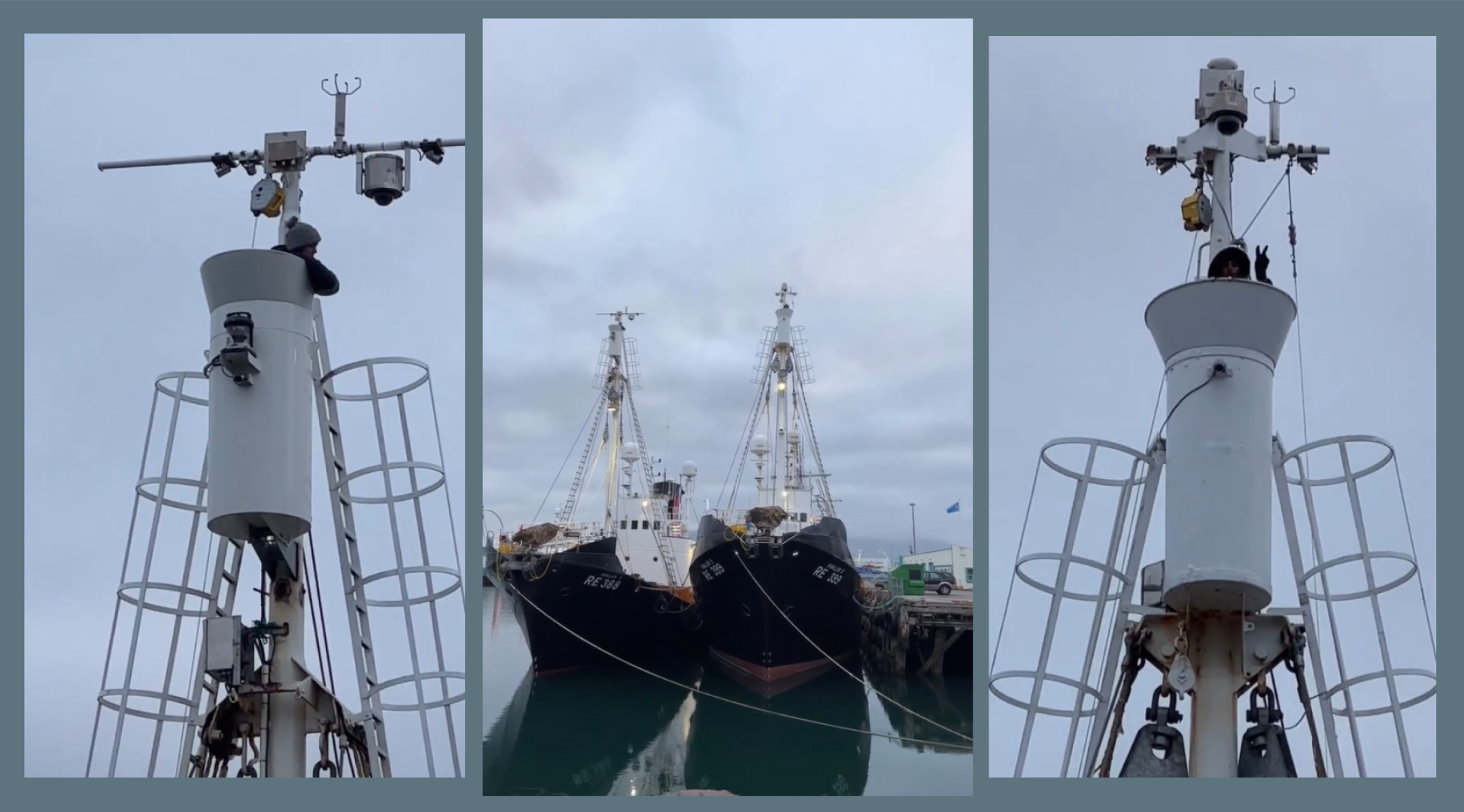
The police confiscated Anahita’s food, water and medicine. Elissa tried to throw snacks across the void that separated the two women but the attempt failed and the food tumbled down the long fall to the decks. Elissa felt guilty that she had some food and water to sustain her during the vigil but she also knew Anahita wouldn’t begrudge her these small comforts.
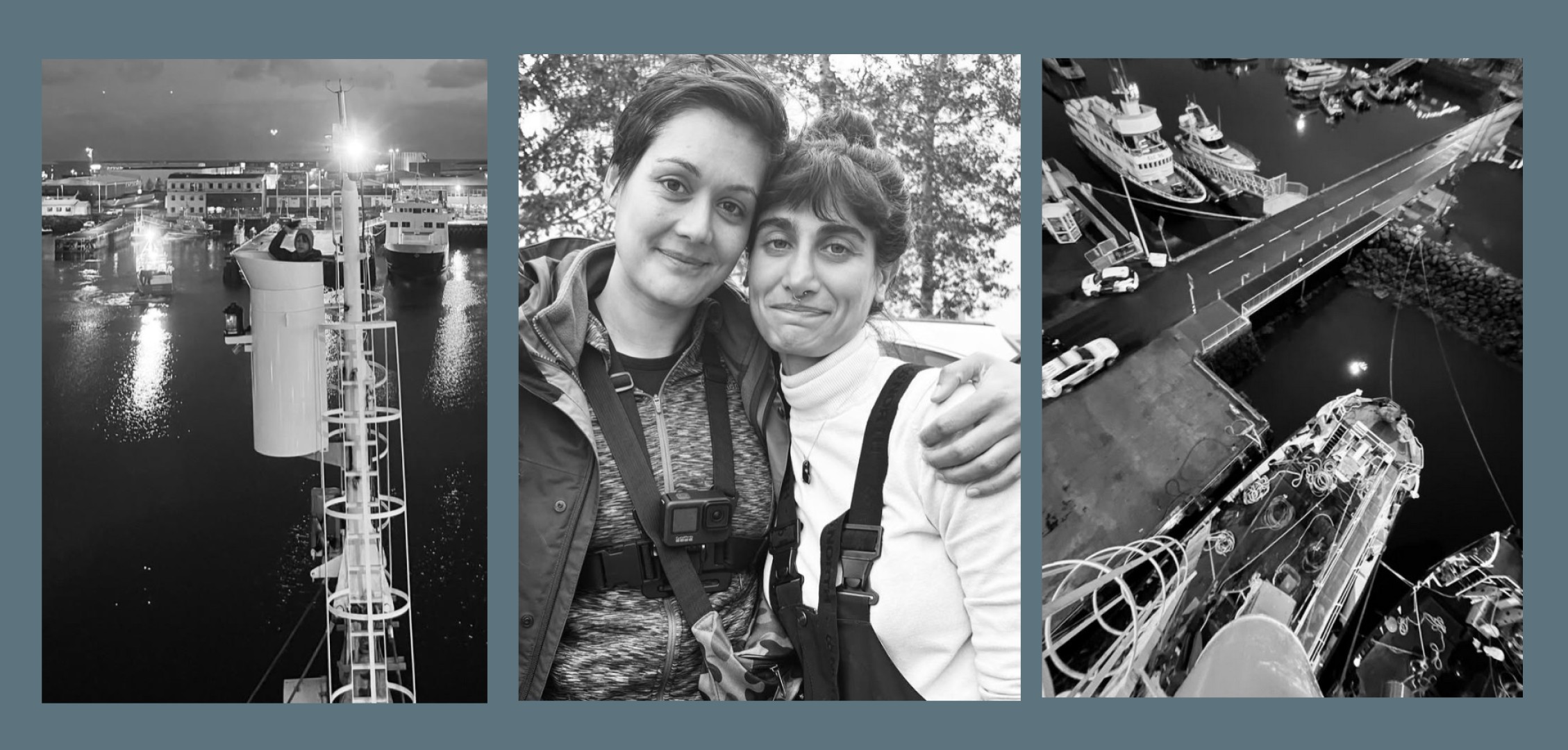
She knew that Anahita would take strength from her presence as she took strength from the courage and conviction of the determined artist sitting high above the other whaling ship. They spent a full thirty-three hours crouched in the small metal barrels at a height of fifty feet. The bitter North Atlantic wind froze them. Smoke from a nearby vessel made them dizzy. Friends and supporters called encouragement and played songs from the ground. They saw two sunrises. On the second day they had no strength left and they came down together, as they had planned, with Anahita shouting her despairing apology to the whales.
Two years later they were found guilty on charges of trespass and failure to comply with police orders. Their conviction came the day after World Whale Day, the irony lost on nobody as whales were the reason the women were in court.
They were convicted on 26 February 2026, fined and ordered to pay all legal costs. The CEO of the whaling company said the prosecution was intended to deter anyone else from doing the same.
During their occupation they had caused no damage and no physical harm to anyone. They had merely installed themselves into the crow’s nests of H8 and H9, the only active fin whaling vessels left in the North Atlantic. The ships had been scheduled to sail that morning but the women prevented their departure.
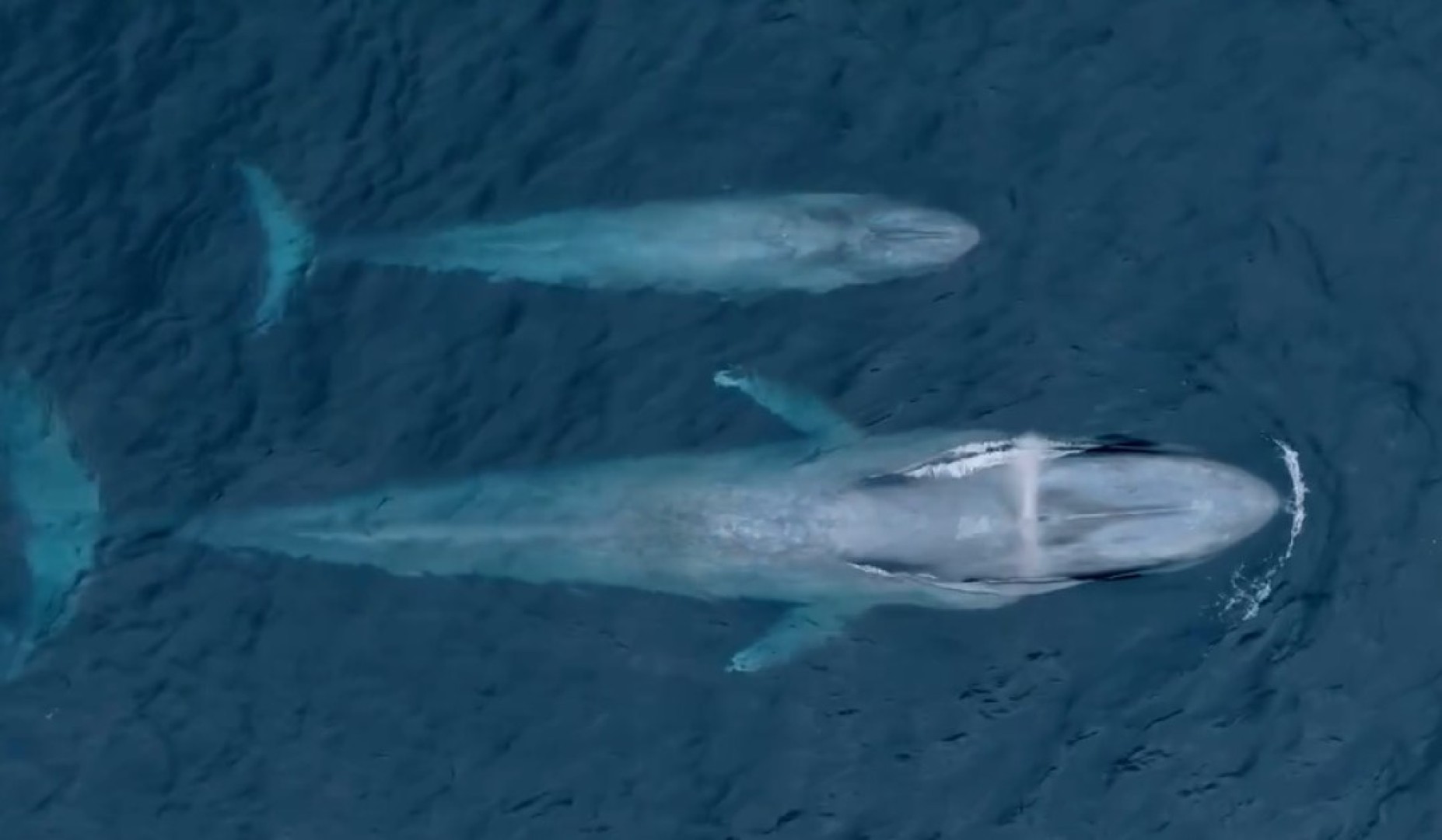
I am writing from the west coast of Ireland. Change one letter in my country’s name and you have Iceland, which sits nine hundred miles to the north-west of my home. We share the North Atlantic Ocean and we share the fin whales that swim in it. “Some whales are big, some are fast, some have unusual looks. The fin whale somehow manages all three.” This charming and apt description comes from the Whale and Dolphin Conservation organisation and we immediately grasp that we are dealing with something special.
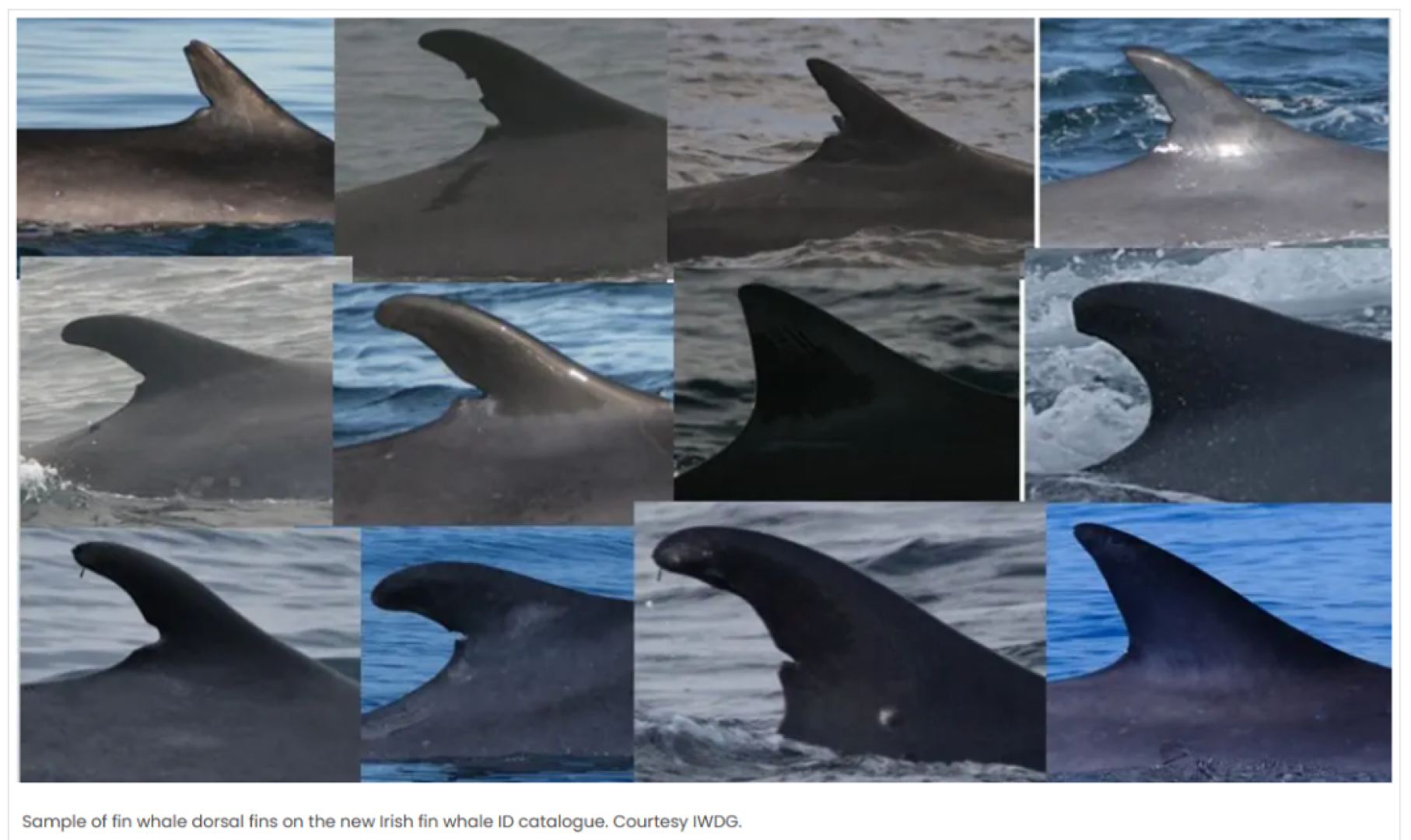
Fin whales are the second-biggest mammals in the world, after the blue whale. They are shaped differently to the blue whale, being slender and streamlined, with a large hook-shaped dorsal fin. Nicknamed the greyhound of the sea, they frustrate whale-watchers with their quick appearances and speedy departures. It’s hard to imagine that you could miss spotting an animal that can weigh up to 80 tons (an elephant weighs a mere 5 tons). Fin whale jaws are unusual too; their lower jaw on the left side is black but the right side is a brilliant white – an asymmetrical pigmentation that is only found elsewhere in Omura’s whale.
The International Union for Conservation of Nature (IUCN) classifies fin whales as Vulnerable globally, meaning they face a high risk of extinction in the wild. North Atlantic populations remain well below historical levels. Fin whales mature late, reproduce infrequently, and raise calves that take years to reach independence, so the recovery of their numbers is slow.
As of 2018, there are an estimated 70,000 fin whales in the North Atlantic. The fin whale was given full protection from commercial whaling by the International Whaling Commission (IWC) in the North Pacific and the North Atlantic, with small exceptions for aboriginal catches and catches for research purposes. Iceland and Norway are not bound by the IWC’s moratorium on commercial whaling because both countries filed objections to it. In 2019, Japan also left the IWC and resumed commercial whaling.
Elissa and Anahita’s demonstration was more than a protest against the killing of whales. It was a means of spotlighting corruption and illegality.
Elissa Phillips (Director of Incredible Oceans CIC) had spent two hunting seasons braving the cold on a cliffside above Iceland’s last whaling station, logging each fin whale brought back by the Hvalur fleet. “I’ve never seen a fin whale alive,” she told Luke McMillan of Ocean Rising. “But I’ve documented countless dead.”
Volunteers diligently observed and documented the condition of the whales and the circumstances of their deaths at the whaling station. Forty percent of the fin whales struggled for approximately eleven and a half minutes before they died. Two whales took over an hour to die. One whale fought for two hours.
In 2023, The Icelandic Food and Veterinary Authority released a report which concluded that the methods used in fin whale hunting violated Iceland’s own animal welfare laws. The majority of Icelanders and the country’s politicians were in agreement: fin whaling had no place in a modern democracy and the hunt was suspended.
In November 2024, Icelandic news outlet, Heimildin, reported on undercover recordings which revealed that Jón Gunnarsson, a member of parliament for Iceland’s Independence Party, had made a deal with the Prime Minister, whereby he would be appointed to the Ministry of Food, Agriculture and Fisheries. There he would be in a position to secure a whaling license for Hvalur hf., Iceland’s sole remaining whaling company.
After the recordings were publicised in the media, there was a parliamentary committee investigation and the Prime Minister announced that Gunnarsson would be removed from any responsibilities related to whaling licences.
However, in December 2024, the Prime Minister went ahead and issued a new five-year whaling license to Hvalur hf. The company was granted permission to kill up to 209 fin whales annually through to 2029.
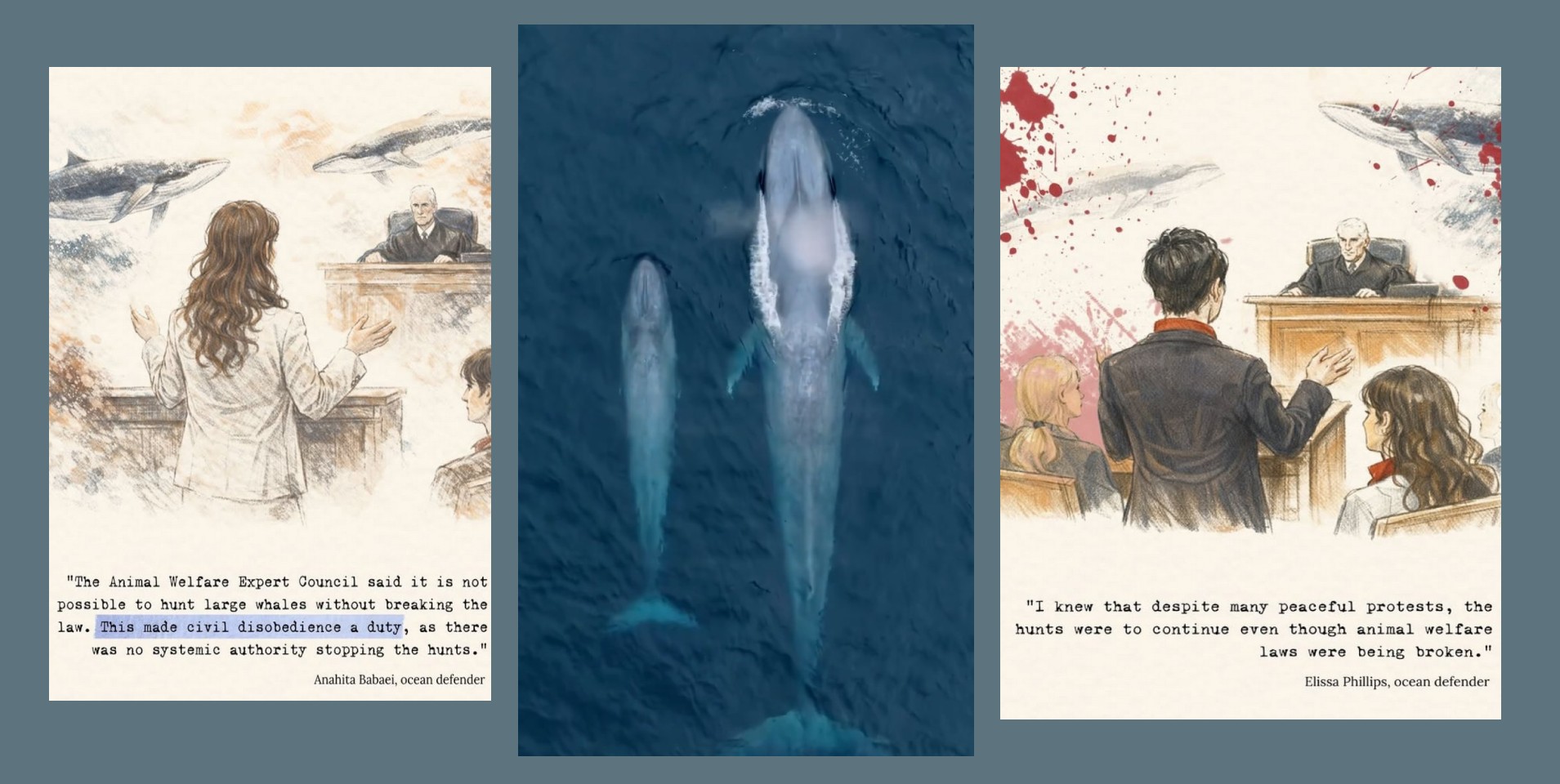
Phillips and Babaei felt that civil disobedience was their only option and they climbed the masts of the whaling ships and remained in place for thirty-three hours.
To quote the Ocean Rising article: “The activists had claimed the system was corrupt. Secret recordings suggested they were right. The licence was issued regardless. Now the whistleblowers face trial. The alleged dealmakers do not.”
These whales are not being killed to feed a hungry nation. Icelanders don’t eat whale meat. The meat is being exported to Japan, for vending machines and pet food. But Japan resumed their hunting so the demand for the Icelandic supply has disappeared. The boats stood idle in 2025 but the five-year license remains in force. The CEO of the company is a millionaire with many other business interests. Phillips describes his whaling operation as “the vanity project of a rich, hateful man” and it is hard to ascribe any motivation for the hunting except stubborn spite.
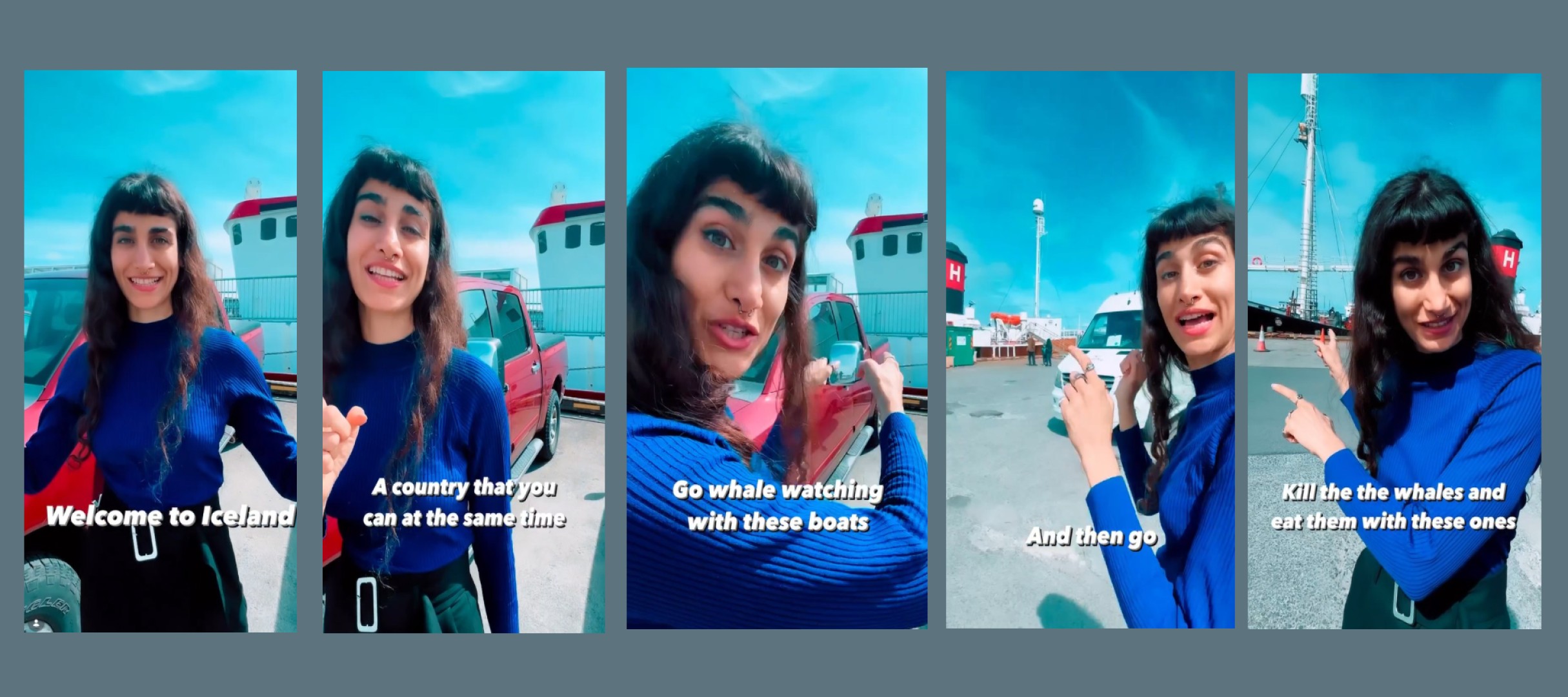
Babaei has a video on her social media where she stands on a pier and indicates the whale-watching boats that are moored to one side. Whale-watching is a popular activity that generates revenue and enhances the reputation of Iceland. She takes a few steps and indicates the other side of the pier, pointing to the ships which are used to hunt and kill whales.
Hunted whales are killed with harpoons that explode on impact. When a female is killed, we have lost not just the whale herself, but all the calves she might have had.
The heart of a fin whale is the largest of any known animal on the planet.
The hearts of their defenders beat with tenacious determination to see an end to their killing.
Sources:
https://uk.whales.org/whales-dolphins/species-guide/fin-whale/
https://en.wikipedia.org/wiki/Fin_whale
https://iwdg.ie/iwdg-establish-an-irish-fin-whale-photo-identification-catalogue/
Photograph credits:
https://www.instagram.com/anahita.earth/
https://www.instagram.com/elissa_nereid/

Moo Who?
